I want to begin by explaining my love of Rhonda Allison products. I have worked with various different product lines, (G.M. Collin, Source Vital, PCA...) and I think they all have strengths and weaknesses. All of them have products and ingredients I find to be outstanding. Rhonda Allison is the only brand I've used where I can't find the weakness.
Oh, Rhonda Allison, how do I love thee? Let me count the ways...
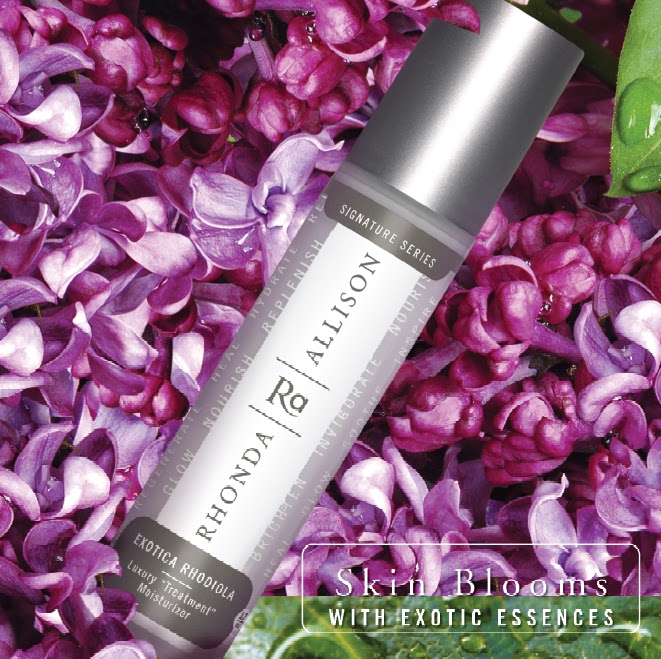
- I love thy innovative packaging. Packaging is usually just fluff--an extension of a products' marketing campaign to help it look pretty. Not only does Rhonda Allison's packaging look great, it also serves a purpose. All of her serums and moisturizers have a unique twist-up pump that locks into place. I don't like jars because it's easy to contaminate the product, and the ingredients are constantly being exposed to air (you know who you are, PCA...). Pumps solve the contamination issue, but the pump allows the product to constantly be in contact with the air--and as product is removed from the bottle, the empty space is filled with more air. This packaging resolves both issues--twist the pump up, and it locks into place. Pump as much product as you need, and then twist and lock the pump back into place. The double-wall of the bottle helps keep the product temperature-controlled, and the inside chamber presses up as you use product, keeping only product inside---no air--this keeps the ingredients fresher longer by preventing them from oxidizing or drying out. As a bonus, you can travel without fear of wasting your products, and ruining your favorite clothes!
- I love thy motto "naturally scientific". Rhonda Allison uses loads of natural ingredients that are great for the skin like pumpkin, pineapple, cherries, pomegranates, blueberries, and grapes; but isn't afraid of using scientific research to their advantage by using ingredients like polypeptides and epidermal growth factor. It says right on the "about us" section of her website: "Always looking to nature for inspiration, Rhonda blends the best of active natural ingredients with highly beneficial, scientifically developed compounds to create a synergy of superior professional treatments and customized home care products that will transform the condition of your skin." I really believe they do a great job of marrying the two. Source Vital was an all-natural line, that mainly focused on using algae, seaweed, and essential oils. The products stayed the same over the years, despite new technological advances. Rhonda Allison is constantly re-formulating their products to make them better, and is always working on developing new ones.
- I love that thou stays artificial preservative, color, and fragrance free. It's nice to know that when a product is orange and smells like pumpkin---it's because there is pumpkin REALLY in it. Not because of added dye and scent. Artificial preservatives (parabens are an example of this), colors, and fragrances are all common irritants, making this line great for people with high sensitivities.
- I love that thou doth not test on animals. Always tested by human volunteers, not by unsuspecting bunnies.
- I love thy zest for knowledge. Rhonda Allison's team stays abreast of scientific research, and insists on offering affordable continuing education classes for estheticians and esthetics students. She posts free webinars on her website constantly, and sends e-mail notifications about the latest developments in the line. I just recently attended this hands-on class in Dallas, TX.
- I love thy integrity. I can rest assured that these products will deliver results and do what they say they are going to do, when used consistently, and according to directions.
- I love thy plentiful offerings. It can be intimidating to some having so many things to choose from. But some ingredients and formulas work well for some, and not as well for others. I like that they utilize FDA recognized ingredients like Benzoyl Peroxide, Salicylic Acid, and Hydroquinone (ingredients some companies are too scared to use). Since skin is not one-size-fits all, it's nice to be able to pick and choose among products to come up with the perfect fit.
That said, you will be able to navigate any skin care line to find products that use worthwhile ingredients if you take the time to know some of the ones that are most commonly used.
Performance Ingredients and Functional Ingredients
All products have performance ingredients and functional ingredients. The Performance ingredients are the performers in the play---the ones that really wow you--they have a direct affect on the skin. The functional ingredients are the stage hands, the lighting crew, the sound effects guy--they are essential to the impact of the entire play, but aren't usually given as much credit (although it's very deserved). Functional ingredients help the product to spread, give the product viscosity (thickness) or any other texture, give it scent, or even color.
In a product, a specific example of a performance ingredient might be something like Lavender-- it's antibacterial, soothing, healing, and stimulating. An example of a functional ingredient is Sodium Lauroyl Lactylate, which is a natural emulsifier. (it enables oil-soluble and water-soluble ingredients to be blended together without separating). It also helps products like cleansers to foam.
Some ingredients can serve both as a performance and functional ingredient, like Aloe, which is healing and moisturizing, but can also be a great gel base to carry other performance ingredients.
In products that are considered drugs by the FDA, performance ingredients are referred to on the label as "active ingredients", and functional ingredients are referred to on the label as "inactive ingredients". These terms are often used interchangeably.
This post will be focusing primarily on performance or active ingredients.
Product Classifications
Cleansers
Cleansers can come in many varieties---typically those that are gel-based are good at removing excess oil from the skin, those that are more of a milky-type consistency are good for sensitive skin or skin that already has a good oil/water balance, and thick creams like cold creams are targeted for particularly dry skin. Cleansers are the backbone of any home-care routine. Clean skin absorbs products much more effectively. I recommend most people cleanse two times a day. Many cleansers can work double-duty as an exfoliant, depending on the ingredients. Examples are Rhonda Allison's Beta Green Tea Cleanser with Salicylic Acid (I've spoken more about SA here), Glycolic Herbal Wash with Glycolic Acid, an acid derived from sugar cane that moisturizes while exfoliating, and her Pumpkin Cleanser with Lactic Acid (an acid derived from milk, that is known for lightening benefits).Other common ingredients in cleansers are also found in the other types of products I will mention below.Toners
Toners can be very beneficial, but not necessarily in the classic sense. Many people would use them as an astringent to mop up excess oil and dry out the skin. I don't like when toners have too much alcohol---although it can be antibacterial, it is often too drying---leaving the skin red, irritated, and often even strips both the oil and water from the skin. Toners were also touted to "restore the skin's pH balance". Most cleansers are formulated at a pH higher than the skin's so the pores are opened, allowing them to be cleaned more easily---toners are often formulated at a pH that is lower than the skin--constricting the pores. This does make them appear smaller--but the effects are only temporary--because the skin regulates its own pH, and eventually will return to its normal pH one way or the other. These days, toners are more an extension of the cleansing process--a way to make sure that the skin is really clean by removing any traces of leftover cleanser, and potentially exfoliating too. Not only that, but since toners are left on the skin, they are also part of the treatment process--it's the first part of layering ingredients targeted specifically to improve the skin. Rhonda Allison's Raspberry Lotion has ingredients like Resveratrol, which has high antioxidant power (more than vitamins C and E combined) and is derived from grapes used to make red wine. It has gained a lot of popularity after being talked about by Dr. Oz and Oprah, and also covered in 60 minutes. Studies suggest that when taken as an oral supplement, it can significantly slow the aging process, and can potentially reduce risk for cardiovascular disease.Moisturizers
Glycerine is a very common hydrating ingredient that binds water to the skin, as is Squalane, which is a lubricant that is extracted from olives and is a main component of the oil human skin naturally produces. Sorbitol is a unique hydrating ingredient, because it draws moisture from the air--making it ideal for summers in humid Houston, TX (in more arid climates or dryer seasons, sorbitol can actually do the reverse and take water from your skin and put it in the air, so I'd recommend using a different product, or using a home humidifier to keep the air moist). Allantoin, like Aloe, is healing and draws water to the skin. Camellia Sinensis Leaf Extract (Green Tea) is another common ingredient because it's full of antioxidants, which help keep skin cells healthy.
Not all moisturizers have to be creams--some are light-weight gels. I love recommending gels for use in the morning under makeup, or for people with oily or acne-prone skin. The skin is still hydrated, but doesn't feel tacky or greasy. I specifically like Growth Factor Gel and Blushed Wine Gel, both of which are from Rhonda Allison. Found in the Growth Factor Gel, Epidermal Growth Factor (it's scientific name is rh-Oligopeptide-1 and it is sometimes referred to as EGF for short) is a type of peptide, and a vital protein that is found naturally in human fibroblasts (the cells responsible for making collagen). They increase cell renewal and assist in wound-healing. Moisturizers are typically very rich in performance ingredients that target anti-aging. Many brands have a one-size-fits-all sentiment for anti-aging moisturizers, though, which can cause problems for oilier skins, since many are targeted for individuals looking to reverse the signs of aging rather than prevent them. Since oil production tapers off as we age, these creams are rich in ingredients like Butyrospermum Parkii (Shea Butter), and Mineral Oil, which sit on top of the skin, keeping water trapped underneath. They are good in small quantities, but too much can either cause the skin to rely on it for moisture, and stop producing oil on its own, or can make the skin become clogged because it is too heavy.
Serums
Serums are products with high concentrations of performance ingredients. They are sometimes formulated with smaller molecules so the ingredients are better absorbed deep in the skin, where they can do the most good. Serums are often layered under moisturizers or used in place of moisturizers. I love recommending clients add a serum under their moisturizer for additional hydration in harsh winter weather--when the weather becomes more appealing, they don't have to switch moisturizers, they can just discontinue use of the serum. Serums often have antioxidants like L-Ascorbic Acid (Vitamin C)--an antioxidant that is essential to collagen production, Retinol (Vitamin A)--which helps normalize a cell's DNA to assist in repair, and D-Alpha Tocopherol (Vitamin E)--a natural moisturizer that aids in repairing the skin with natural preservative properties. Product examples include Rhonda Allison's Super C Serum, Therapy A Serum, Therapy E Serum, and Antioxidant Complex Serum as well as PCA's A&C Synergy Serum.
Another type of ingredient commonly found is peptides. They are amino acids that are linked together to from a specific grouping, they stimulate fibroblasts and signal the skin to produce more protein, increasing the skins' firmness, tone, and diminish fine lines. Examples of peptides are Palmitoyl Tripeptide-5, Caprooyl Tetrapeptide-3, Acetyl Hexapeptide-8, Palmitoyl Pentapeptide (also seen on labels as Matrixyl or Matrixyl 3000), Marine Oligopeptide,and L-Carnosine. These can be found in Satin Peptide, Amino Peptide Serum, Youth Essence Peptide Serum, MVC Serum, and many other Rhonda Allison products. They can also be found in PCA's ExLinea Peptide Smoothing Serum and G.M. Collin's Bota-peptide 5 Complex. As mentioned above, Epidermal Growth Factor (EGF) is another kind of peptide, and can be found in PCA's Rejuvenating Serum.
L-Sodium Hyaluronate (Hyaluronic acid) is also found in many serums (and moisturizers for that matter). It naturally occurs in the body and draws water to the skin. It's found in Rhonda Allison's appropriately named Hyaluronic Serum, as well as many other of her serums and moisturizers. Hylauronic Acid is also the main ingredient used in the injectable fillers Restylane, Perlane, Hylaform and Juvederm.
Other serums are targeted at correcting problems other than lack of moisture or wrinkled skin, like Rosacea, Acne, or discoloration. Common in rosacea products, Caprylic/Capric Triglyceride, Diprpoylene Glycol, Betula Alba Bark Extract, and Scrophularia Nodosa Extract all improve the skins barrier function to decrease skin's vulnerability and reaction to inflammation. They also help reduce extreme swelling and heat associated with this inflammatory condition, and protects from UV exposure. Salix Alba Bark Extract (White Willow) contains glycoside salicin which acts as an analgesic (topical numbing solution) the skin to be less affected by extreme hot or cold temperatures. Salicylic Acid is common in products targeting acne (Rhonda Allison's Blemish Serum, PCA's Acne Gel, G.M. Collin Derm Renewal Gel), as is Sulfur, Resorcinol, and Benzoyl Peroxide (All of these are discussed more in my post about Acne). Great product picks with BPO include Rhonda Allison's Blemish Complex, and PCA's BPO Cleanser and Acne Cream. Other great ingredients for treating acne are Melaleuca Alternifolia Leaf Oil (Tea Tree) which is known for healing, antiseptic qualities, and Fomes Officinallis (Mushroom extract), which inhibitis tyrosinase (the enzyme that produces melanin--the pigment of the skin) and is also antibacterial. This can prevent the little dark reminders of past acne from sticking around. As far as lightening products go, Hydroquinone is a chemical that is another tyrosinase inhibitor (like the mushroom extract). It is the only lightening ingredient recognized by the FDA and is available in a concentration of 2% in Rhonda Allison's Skin Brightening Gel or PCA's Pigment Gel. Other ingredients that help lighten excess pigmentation include Kojic Acid, and Azelaic Acid--which are somewhat more gentle tyrosinase inhibitors and lightening agents. L-Ascorbic Acid (Vitamin C) is also said to help reduce excess pigmentation. These and other ingredients are found in Rhonda Allison's Naturale Mega Brightening Serum, Skin Brightening Cleanser, Skin Brightening Scrub, and Brightening Cream Enhancer and PCA's hydroquinone-free version of Pigment Gel.
Exfoliants
Exfoliation, in my opinion, is one of the best possible tools you can use to improve the skin--almost every skin condition is bettered by introducing exfoliation. Different types can achieve somewhat different results, but it is generally accepted that exfoliating the skin helps generate new skin cells (since the old cells must be replaced), helping to keep the skin rejuvenated and young. It obviously helps the texture of the skin to become softer and smoother (just as sandpaper helps a piece of a wood become smooth), it increases the skin's circulation, keeps the pores clear to prevent acne from forming, reduces pigmentation problems, and helps products that you use to penetrate more easily--allowing them to be more effective.There are a few different kinds of exfoliants:
Mechanical exfoliation are ways of physically sloughing off the skin cells--like using a clarisonic brush when you cleanse, using a scrub that has beads or crystals in it (like jojoba beads, or corundum crystals), or even microdermabrasion (which sprays corundum crystals across the skin--kind of like sandblasting). I do not like exfoliants that use pieces of fruit pits, like St. Ive's Apricot Scrub, because the particles are jagged and can cause microscopic tears in the skin--aggravating it more than necessary. A good scrub should have tiny round spheres. Sugar and salt scrubs can be good for the body, but something designed for the face should be smaller to get the best results--also if you choose a salt scrub for the body, keep in mind it could sting if you have any knicks from shaving, or razor burn. Rhonda Allison's Clarifying Beads provide a very gentle exfoliation using jojoba beads.
Chemical exfoliation reaches further, by using acids that can be absorbed into the skin, actually exfoliating inside the follicle. Look for ingredients like Lactic Acid, Salicylic Acid, Glycolic Acid, and Mandelic Acid (derived from Almonds).
Enzyme exfoliation delivers results similar to chemical exfoliation. It too is absorbed into the skin, exfoliating inside the follicle. These enzymes--like the digestive enzymes found in human saliva and the human pancreas that help break down food--work similarly on the skin to literally digest the skin cells it comes in contact with. Enzymes are generally m ore gentle than most acids. Commonly used enzymes include Papain (papaya), Bromelain (pineapple), Pepsin (found in various plants) Cucurbita Pepo (pumpkin) and even Pancreatin (taken from cows). I personally don't like using Pancreatin, since there are so many other more appealing enzyme options. Rhonda Allison's Pumpkin Parfait Enzyme is a perfect example. (none of Rhonda Allison's products contain Pancreatin to my knowledge)
Combinations of Mechanical, Chemical, and Enzyme Exfoliation are also common. Rhonda Allison's Beta Action Scrub combines jojoba beads with Salicylic Acid. Pumice Wash combines jojoba beads with pumice grains (ground up pumice stone), Lactic Acid, and Salicylic Acid. When I recommend clients use these at home, I often suggest they leave them in the shower--they can massage it in like any other scrub, and leave it on for 3-5 minutes like a mask--so the acids have a chance to work. While it sits, they can go about shaving and/or and washing their hair---rinsing it off when they're done. A Gommage is the term used for a product that uses both enzyme and mechanical exfoliation. Rhonda Allison's Derma Peel does exactly that. It's one of my favorite products, not only because it delivers great results--but it's also pretty fun to use! Gommages typically have an enzyme that works while the product is left to dry on the skin--once it is dry, it is rolled off the skin---the friction caused by rolling it off mechanically exfoliates. This particular one works slightly differently: It starts off feeling like a thick gel, as you massage it onto the skin it becomes more of a thin liquid consistency, as you massage it further, you will start noticing little pieces starting to form as it becomes almost like a scrub---the pieces that form are actually the ingredients sticking together with your dead skin cells to exfoliate even further. It's very gentle, but super effective. One product I like that is a traditional gommage is Source Vital's Citrus Peel. I personally still use this product, although I no longer work for a company that retails it. Source Vital is manufactured in Houston, so it should be pretty easy to get your hands on. The company was founded by one of my former Employers, Brea Pope Gratia, owner of Sanctuary Spa D'Sante. Yet another possibility is combining enzymes with acids. Rhonda Allison's Skin Brightening Enzyme uses Papain along with Salicylic Acid and Kojic Acid. The Cherry Jubilee Enzyme uses Bromelain along with Lactic Acid and Salicylic Acid [it has cherry in the name because it also uses Prunus Speciosa (Cherry)--known for their soothing and anti-inflammatory properties].
Masks
Masks are honestly one of the very last things I recommend for use at home. I think they can certainly be beneficial to the skin, but I think exfoliants (and all the other products) are far more important--it's with exfoliants that you see the most dramatic results and improvement. I do like using masks during facials--I recommend keeping them refrigerated (especially if they contain fruit-based ingredients) to not only preserve them longer, but also to use the coolness of the mask to help soothe and refresh your skin. I find this technique (refrigeration) especially beneficial to calm the skin and help take the redness out of skin that has been vigorously exfoliated and stimulated with steam and extractions.
There are many different kinds of masks. Gel and cream-based masks are often soothing and hydrating--they don't harden, which makes for easier removal--something people with sensitive or rosacea skin can appreciate. Clay masks usually are stimulating, firming, and absorb oil. They dry or harden when left on and can sometimes be difficult to remove. Kaolin and Bentonite are some of the most commonly used clays. If you have ever worked with ceramics, or grew up in Virginia playing in Virginia red clay like I did, you know firsthand how quickly clay absorbs moisture. Because these have great firming effects, some formulas will have Glycerine, Shea Butter,Vitus Vinifera Seed Extract (Grape-lubricant), Squalane, and other ingredients to prevent it from being too drying. This makes them appropriate even for drier skin types. Rhonda Allison's Grape Seed Parfait Mask, Impure Skin Mask, and Beta Refine Mask all use both Kaolin and Bentonite.
L-Ascorbic Acid (Vitamin C) is common in masks, as is D-Alpha Tocopherol (Vitamin E) and even Resveratrol is popping up in many masks (like the Grape Seed Parfait). Some masks may contain ingredients like Menthol (derived from peppermint) for it's antibacterial, cooling, and stimulating effects. Lycopene (an antioxidant plentiful in tomatoes) is becoming more common in masks. One I've used and liked before with lycopene is Eminence Organic's Tomato Lycopene Masque. Antioxidants like Camellia Sinensis Leaf Extract (Green Tea) or more specifically Epigallocatechin Gallate (EGCG--the main polyphenol, a type antioxidant, derived from green tea) are common in masks as well. Calendula Officinalis (Marigold) and Azulene (derived from German Chamomile) are also very popular in soothing masks because they have healing, anti-inflammatory, and anti-itching properties. Algae and Seaweed common, particularly in body masks and wraps for it's antioxidant, firming, and detoxifying properties. Sulfur is also pretty common in masks because it is beneficial for oily or acne-prone skin.
Eye and Lip Products
Many eye products contain similar ingredients that facial moisturizers do. Many are somewhat lighter, or contain lower concentrations of powerful ingredients used on the face because the skin in this area is so delicate. Common ingredients are L-Sodium Hylarunate (hyaluronic acid---for moisture), Retinol (Vitamin A--for anti-aging benefits), several different peptides, Lactic Acid, and L-Ascorbic Acid (vitamin C). Some product picks are the Rhonda Allison's Moisture Eye Treatment, and Peptide 3-in-1 Eye Cream and PCA's EyeXcellence, and G.M. Collin's Bota-Peptide Eye Contour Cream. L-Arbutin is a gentle lightening ingredient, and Mica is a mineral that reflects light is sometimes used in certain products targeted toward reducing undereye darkness, but obviously results are temporary. Examples of products containing L-Arbutin and Mica are Rhonda Allison's Eye Revitalizer and Daylight Eye Parfait.
Rhonda Allison's Eye & Lip Repair Serum has both the Vitamin C and Retinol. I personally love it for the lips as an overnight lip moisturizer, but hate the thick texture around my eyes. PCA's Peptide Lip Therapy has a similar consistency, and also works nicely on my lips over night (either could also be used in lieu of a clear gloss during the day) but they are too thick for layering anything over. G.M. Collin's Lip "Plumping" Complex contains collagen and hyaluronic acid. I think the texture is nice, and it helps the condition of the skin on my lips--but I didn't notice additional fullness. It tingles a lot like other plumping products including Lip Venom; I think they probably can increase the fullness of the lip--but only because they irritate the lips to the point of edema (swelling). On my lips during the day, nothing beats the feel of Nivea's Kiss of Moisture. It feels extremely light on the skin (surprising since it has microcrystalline wax, castor oil, carnauba wax, and shea butter--all somewhat heavier ingredients that help trap moisture in the skin) but it also has ingredients like jojoba seed oil and grape seed oil. It doesn't affect any other lip products I wear over it (lipstick or gloss) and it's the one of two lip products my husband will still kiss me when I'm wearing (he says other things feel too sticky, this he doesn't even notice is on...). The other product I really like for lips is M.A.C.'s Lip Conditioner SPF 15 and Tinted Lip Conditioner SPF 15. It feels really smooth and light going on. It contains some of the same ingredients the Nivea product does, plus vitamins A and E, almond oil, and avocado oil (both excellent moisturizers).
The higher on the list it is, the higher the concentration it is
Ingredients are listed in order from those used in the highest percentage to those in the lowest percentage. Once it gets to ingredients used in concentrations of 1% or lower, they do not have to be listed in any particular order (although as a group they all must appear lowest in the list). The most common cosmetic ingredient is Aqua (water) followed very closely by the most common botanical ingredient, Aloe. Many performance ingredients are in the middle or bottom of the ingredients list, because they use smaller quantities. If you want something truly powerful to fight wrinkles, for example, you may compare two ingredients lists side-by-side. If Retinol is the fifth ingredient listed on one, and the tenth ingredient on the other---your best bet is the one listing Retinol as the fifth ingredient, because it likely contains a higher percentage of it.
This is just the tip of the iceberg.
There are hundreds of thousands of effective (and not-so-effective) cosmetic ingredients out there. These are some you can look for that have proven to me (and many researchers) that they can provide the results they promise. Good luck!
Keeping you beautiful (and informed) one post at a time,
Kate Block


